
Electronic Devices
RoentDek has developed a variety of fast pulse-signal amplifiers, shaping and timing electronic, logic electronic and digitizer. Further technical information can be found in the product lists and in the electronics description sheets:
Product List – Detector Installation and High Voltage Power Supplies
Product List – Front-End Electronics for Analog Signal Processing
The choice of electronics plays a key role in detector performance. Please contact us to find the solution best suited to your application.
High Voltage Power Supplies
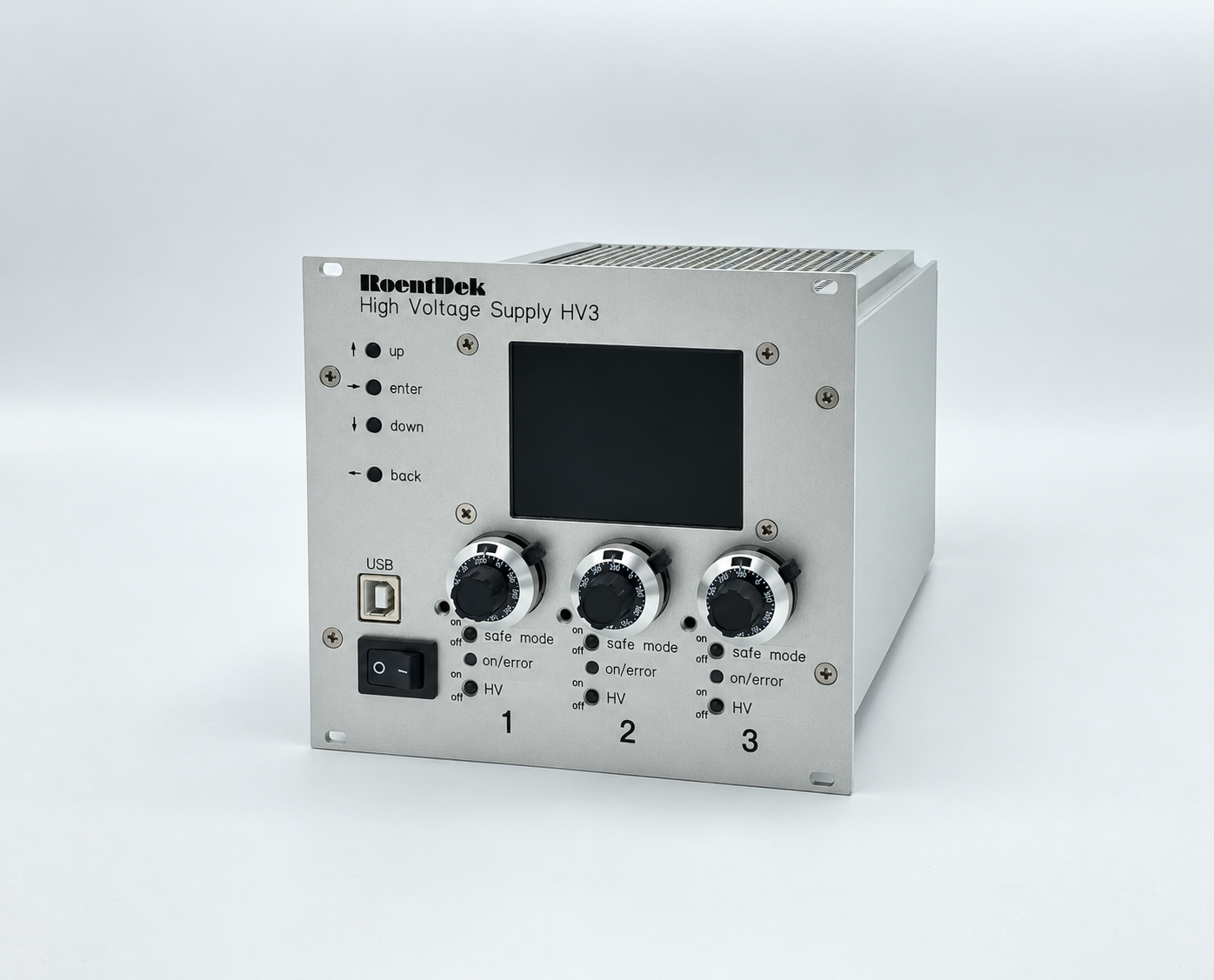
- up to ± 6 kV output voltage
- remote control via USB, TCPIP/Telnet, web interface or DC input control voltage
- output current max. 1 mA
- output voltage accuracy ± 1 V
- ripple/noise: typical < 5 mVp-p, max. < 10 mVp-p
Amplifiers and CFDs
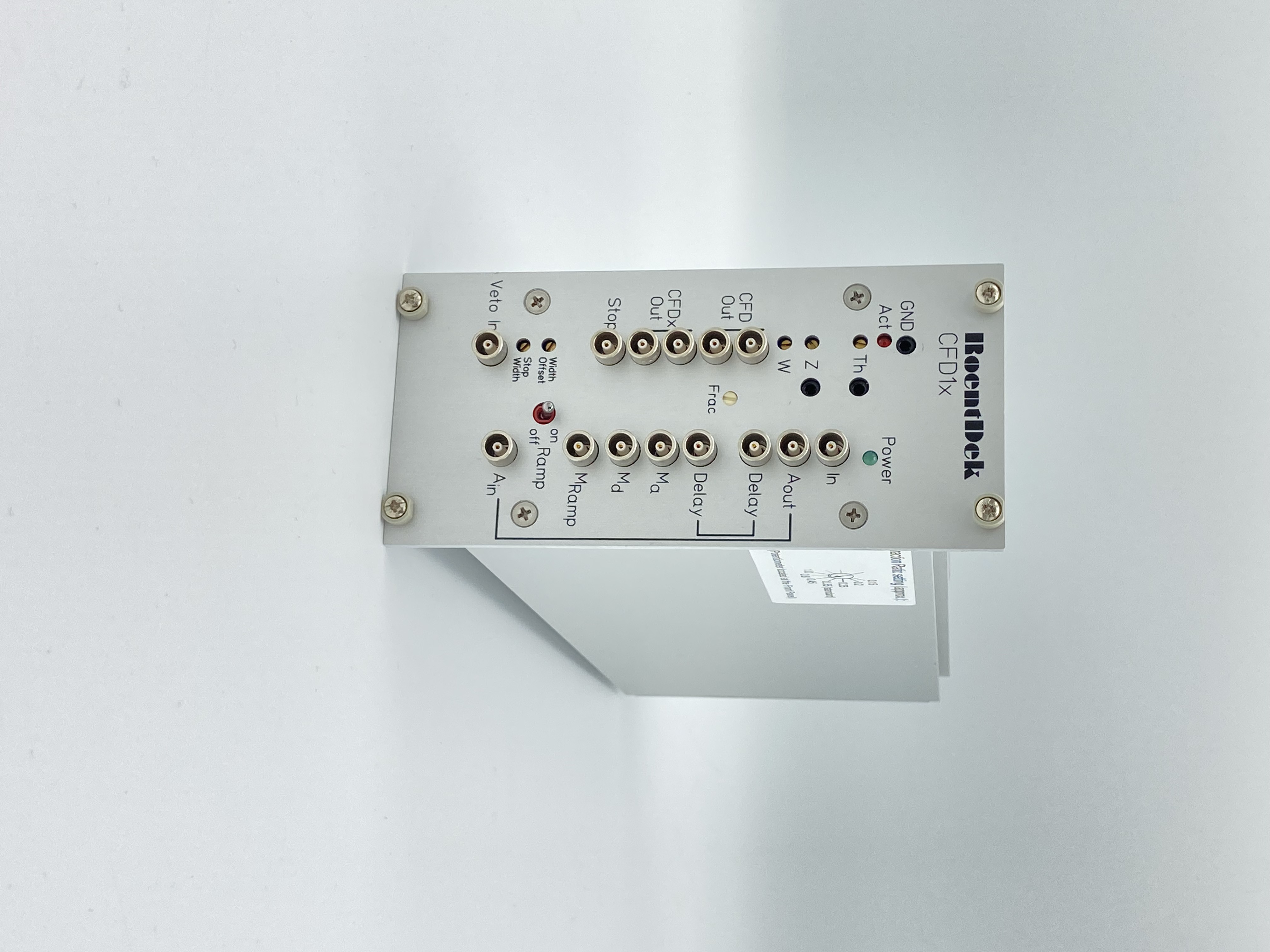
- 1/3/4/6/8 channel amplifiers
- 1/4/8 channel CFDs
- logic modules
- NIM pulse generator
- NIM rate meter and counter
TDCs
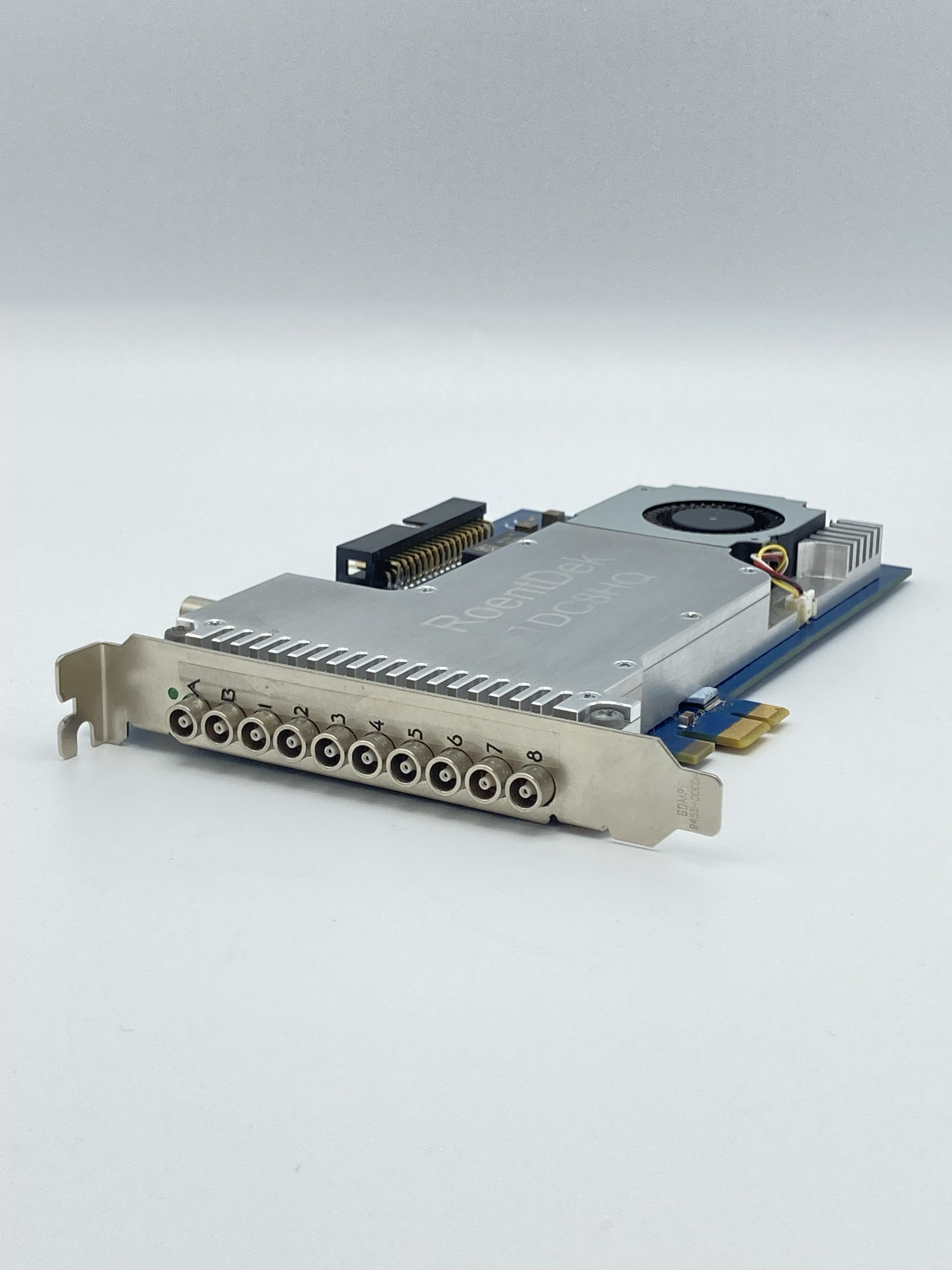
- particle rates up to 2 Mhz
- temporal resolution: 25/13 ps LSB
- multi stops/starts, 10 ns dead time
- 8/16/24 channels
- can be synchronized with our ADCs
- LabView is supported
ADCs
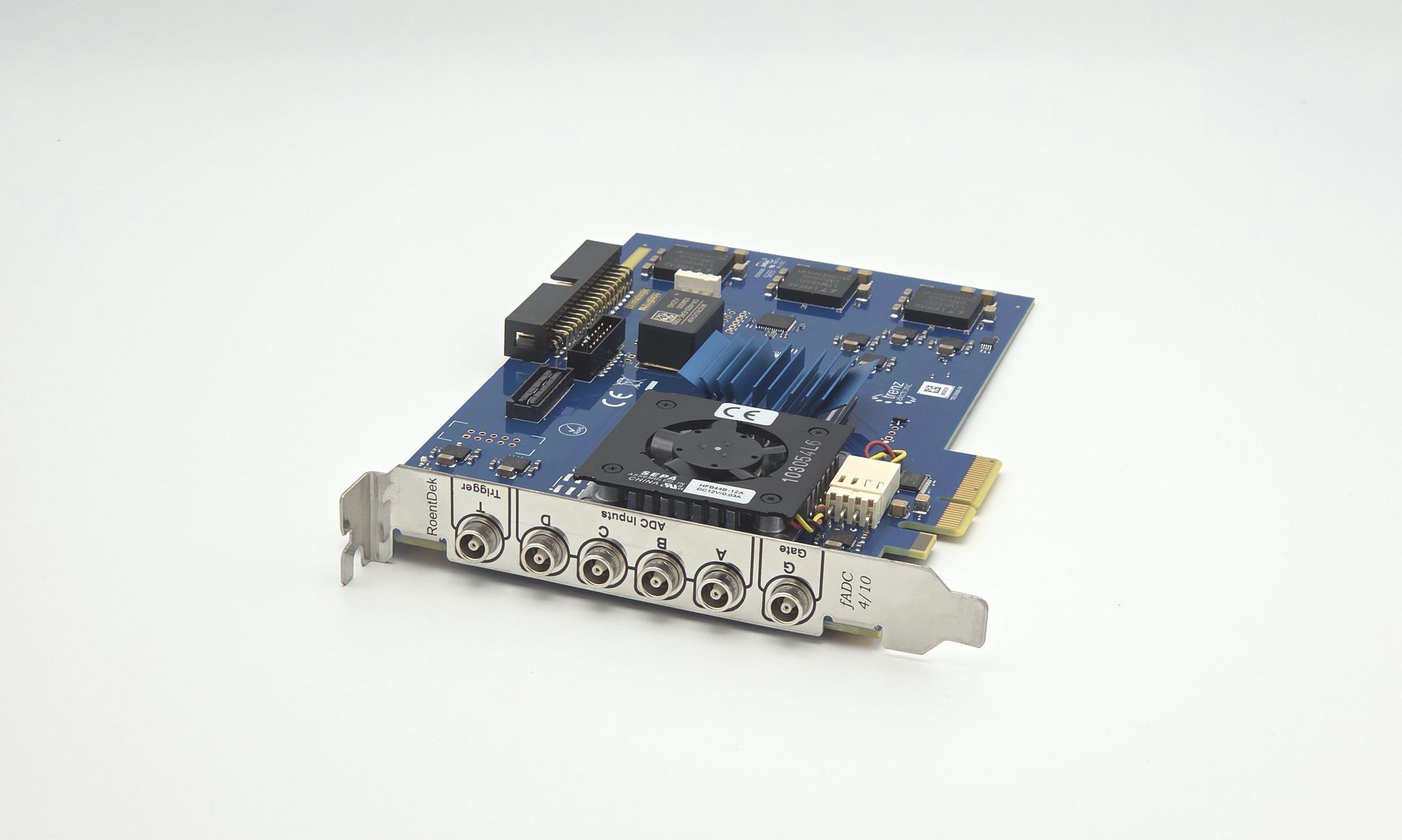
- particle rates up to several 100 kHz
- timing accuracy 25 ps RMS
- 4/8/16/24+ ADC channels (and 1/2/3/4 TDC channels)
- build-in zero-suppression for highest data rates
- can be synchronized with our TDCs
- LabView is supported
High Voltage Power Supplies
- up to ± 6 kV output voltage
- remote control via USB, TCPIP/Telnet, web interface or DC input control voltage
- output current max. 1 mA
- output voltage accuracy ± 1 V
- ripple/noise: typical < 5 mVp-p, max. < 10 mVp-p
Amplifiers and CFDs
- 1/3/4/6/8 channel amplifiers
- 1/4/8 channel CFDs
- logic modules
- NIM pulse generator
- NIM rate meter and counter
TDCs
- particle rates up to 2 Mhz
- temporal resolution: 25/13 ps LSB
- multi stops/starts, 10 ns dead time
- 8/16/24 channels
- can be synchronized with our ADCs
- LabView is supported
ADCs
- particle rates up to several 100 kHz
- timing accuracy 25 ps RMS
- 4/8/16/24+ ADC channels (and 1/2/3/4 TDC channels)
- build-in zero-suppression for highest data rates
- can be synchronized with our TDCs
- LabView is supported
Some of the RoentDek electronic devices have very unique features giving them unsurpassed performance compared to other commercial products or are not available elsewhere:
- The RoentDek FAMP signal amplifiers, for example, can be tuned to different gain ranges, bandwidths and even be operated at varying impedance. This allows optimizing amplifying characteristics for any demand found in other applications.
- The RoentDek constant-fraction discriminators (CFDs) have a variety of controls so that any kind of pulse signal can be processed and turned into a logic signal describing its arrival time. All CFD set parameters (including “fraction ratio”) can be individually selected. Both analog and digital “walk” output signals are monitored for optimal adjustment. Moreover, the CFDx version of the circuit can additionally code signal pulse height into time delay so that pulse height information can be recorded together with signal time. Our CFDs can be gated in time, e.g. to block unwanted signals.
- The fADC4 unit achieves much higher throughput for applications where distinct pulse traces shall be recorded/digitized and processed. A special firmware on the internal FPGA board selects and addresses only the relatively short pulse trace data for transfer to the CPU, ignoring the voids of “noise” data between pulses that contain no relevant information. This significantly enhances data transfer speeds compared to ungated transfer.
- The RoentDek TDCs are among the fastest and most precise time-to-digital converters available on the market. Their special feature is that several units can be synchronized to cope with a large number of channels and they can even be synchronized with fADC4 units. Additional external signals/parameters such as trigger pulses and DC levels can be included in the data stream (TDC8HP). The novel cTDCX can even operate with analog signal inputs making CFD electronics obsolete if amplifiers with bipolar output signals (BFAMP) are used.